

Phased Forest Rehabilitation Strategy for Root Radical Community Supported Agriculture (CSA)
Client: Root Radical Community Supported Agriculture (CSA) (rootradical.ca)
Funder: Ontario Soil and Crop Improvement Association – Resilient Agricultural Landscapes Program (RALP) (www.ontariosoilcrop.org)
Location: Howe Island, Ontario
Overview
Root Radical CSA is a community-supported farm on Howe Island, Ontario, dedicated to ecological farming and local food. Founded in 2007, the farm is run by Emily Dowling and Aric McBay, who grow a mix of organic vegetables, and lease hay and pasture to livestock farmers. About 150 households in the Kingston area take part in the farm’s CSA program, receiving weekly shares of fresh produce. The 84-acre farm includes cultivated fields, permanent pastures, gardens, and wooded areas—reflecting a long-standing commitment to sustainable land care.
In recent years, the farm began to notice signs that several forested areas were approaching a tipping point. Decades of clearing and edge exposure had left many hedgerows thin and fragmented, making them more vulnerable to storm damage and invasive species like wild parsnip and garlic mustard. Photo 1 shows one such corridor, where tree cover has been reduced to scattered individuals, breaking up wind shelter, soil protection, and habitat continuity.

Photo 1. Decades of compounding impacts have left many of Root Radical’s hedgerows fragmented and exposed. Reduced tree cover along these corridors increases sun and wind exposure, weakens soil stability, and disrupts ecological connectivity.
The decline accelerated as ash trees across the property succumbed to emerald ash borer, opening gaps in the canopy and weakening forest resilience. Without intervention, these changes risked locking in long-term ecological decline. The loss of forest cover, combined with growing climate pressures, pointed to the need for active restoration to prevent further fragmentation and support the farm’s long-term sustainability.
Project Description
In 2023, Root Radical CSA turned to Greenscale to lead both the grant application process and the design and delivery of a forest rehabilitation initiative. In collaboration with the farm team, Greenscale developed a phased restoration strategy that addressed the farm’s most pressing ecological needs while remaining within the funding parameters of the Ontario Soil and Crop Improvement Association’s Resilient Agricultural Landscapes Program.
The completed application was submitted in fall 2023 and successfully awarded, enabling the project to begin in early 2024. With the grant secured, Greenscale refined the strategy to reflect both the ecological conditions on site and the practical realities of access and execution. The restoration strategy was shaped by on-site fieldwork, seasonal satellite imagery, historical aerial photos, and drainage mapping across the site.
Conversations with the landowner added context about past management and long-term goals. Seasonal imagery helped identify wet areas and exposed edges, while slope, drainage, and trail conditions were mapped to guide access planning and prioritize equipment staging. Together, these inputs helped classify vegetation cover, identify degraded canopy zones, map snow accumulation and runoff pathways, and highlight areas most in need of forest restoration. Based on this assessment, Greenscale organized the work into five management zones and planned treatments specific to each zone’s conditions and capacity for follow-up:
- Assessment and Mapping
- Large Dead and Damaged Tree Removal
- Initial Replanting
- Patch-Focused Invasive Species Removal and Supplemental Planting
- Monitoring and Ongoing Management
The Assessment and Mapping phase included ground-based observations of canopy structure, understory density, invasive species presence, and physical access constraints. Site visits provided insight into regeneration patterns and canopy loss, clarifying where regrowth was overcrowded and where regeneration gaps and unstable hedgerow edges had formed.
Dozens of dead ash trees were marked for removal, prioritizing those posing overhead hazards or obstructing regeneration along key corridors. In several hedgerows, ash mortality had already triggered canopy gaps, exposed the soil surface, and accelerated the spread of sun-seeking invasive species. The bare crowns of dead ash are visible in Photo 2, where wind and light exposure are increasing soil warming and reducing moisture retention.
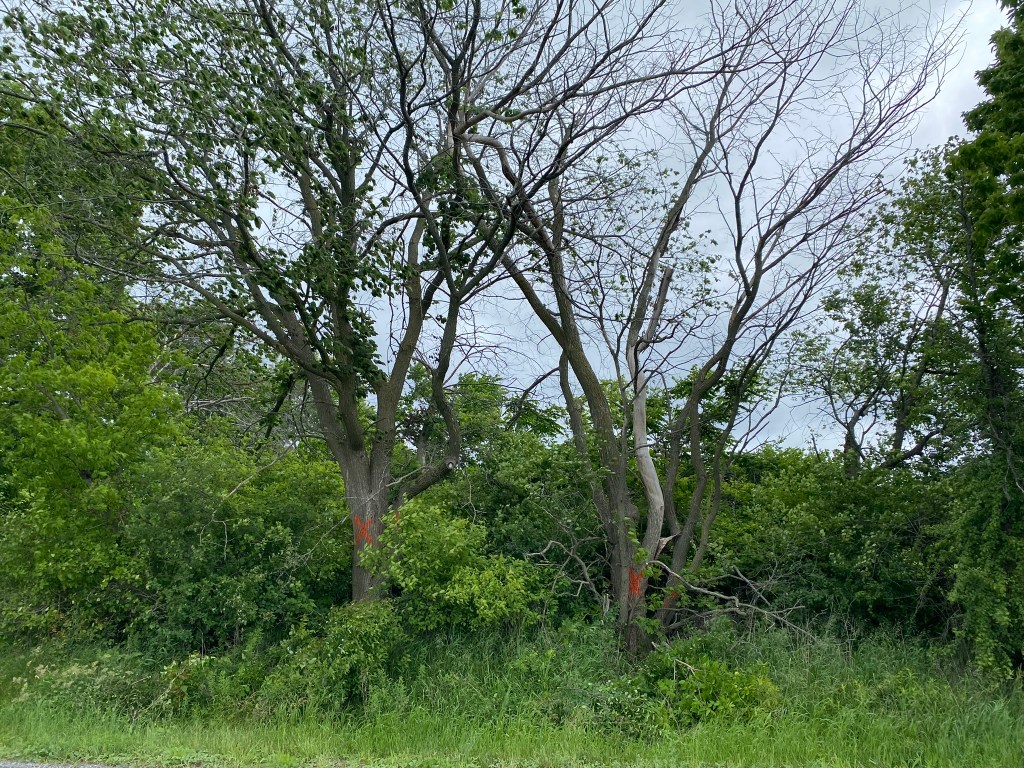
Photo 2. Bare ash crowns mark the collapse of an intact hedgerow canopy. Without native regrowth, these gaps accelerate invasive spread, soil warming, and the loss of stored carbon.
Vines like dog-strangling are increasingly using dead ash as vertical structure to spread and colonize the understory. Photo 3 shows one such tree, its crown and trunk now fully overtaken. Without intervention, this pattern accelerates shade suppression and crowds out native regeneratio
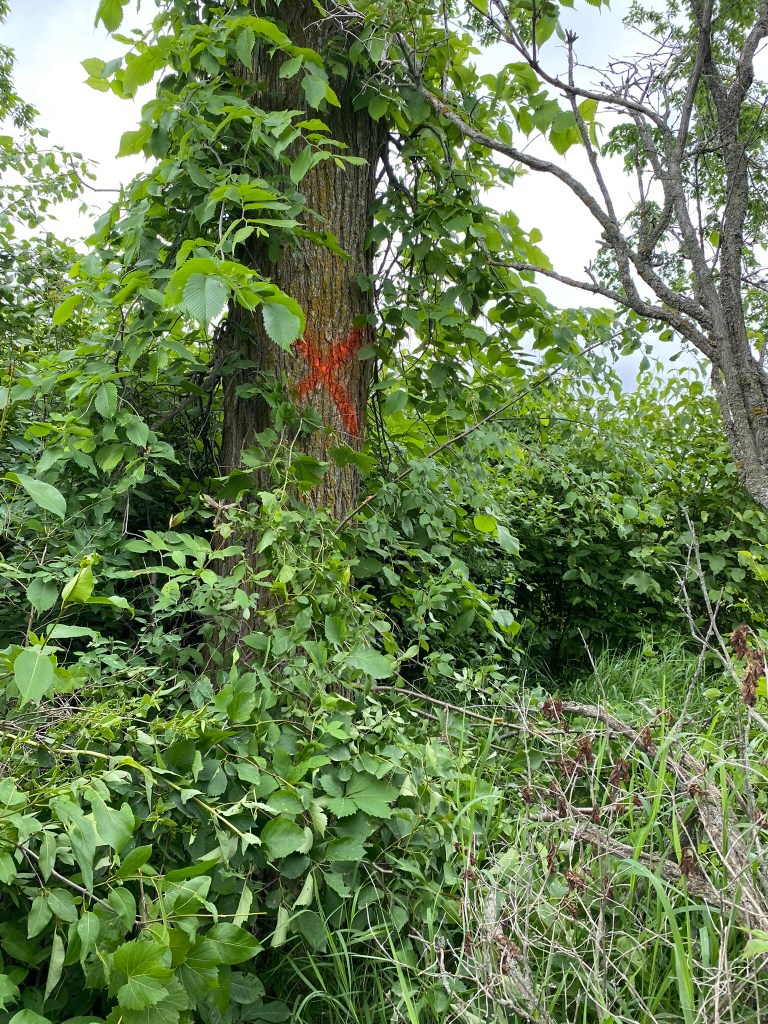
Photo 3. Marked dead ash overtaken by vine growth. With canopy loss from emerald ash borer, invasives like parsnip, garlic mustard, buckthorn, and dog-strangling vine spread rapidly through the exposed understory.
Phase 2 involved the selective removal of large dead and hazardous trees, primarily ash. Greenscale partnered with Stick & Hero Woodland Restoration to complete this work, applying an ecological approach that prioritized habitat structure and in-forest carbon retention. Instead of removing all felled material, logs were stacked in designated on-site piles to decompose naturally over time. This method minimized soil disturbance while supporting biodiversity and long-term carbon cycling. Photo 4 shows one such pile, positioned to preserve structure and reduce disruption in active recovery zones.
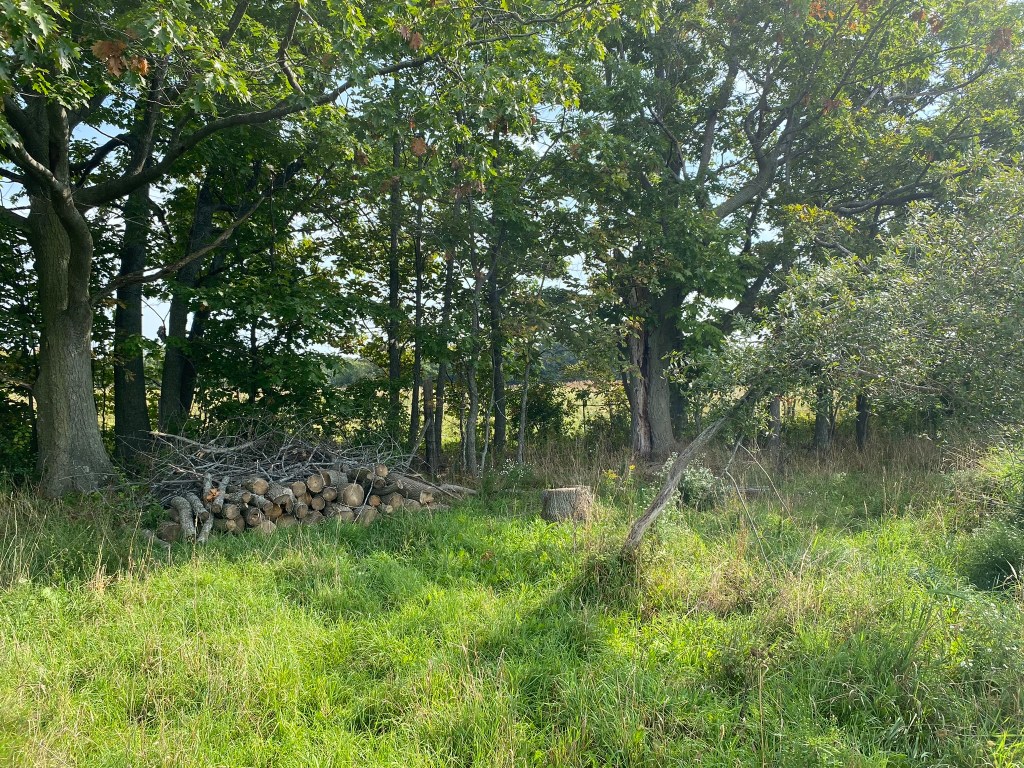
Photo 4. Felled ash logs stacked in concentrated piles to retain carbon, support habitat, and reduce site disturbance.
Invasive species removal in Year 1 was deliberately limited to areas where ash had already been cleared. A site-wide clearing of buckthorn and other invasives would have displaced wildlife, increased sun and wind exposure, and disrupted existing canopy cooling. More importantly, opening up patches without a clear plan for rapid recovery would have risked enabling species like wild parsnip to gain stronger footholds. The project instead focused on strategic zones where invasive removal and replanting could proceed in tandem, ensuring that newly cleared areas were immediately replanted with native trees, shrubs, and groundcover. These patches now serve as anchor points for recovery, establishing structure early and guiding longer-term restoration across the site.
Replanting Phase
The replanting phase focused on restoring forest structure in areas cleared of dead ash and invasive vegetation. In fall 2024, Greenscale sourced 85 locally nurtured seedlings from Little Forests Kingston, a community organization dedicated to fostering dense, biodiverse plantings in support of regional climate resilience. These seedlings—including catalpa, maple, oak, and locust—were planted in strategic canopy gaps to establish foundational layers suited to future conditions.
In spring 2025, the work expanded with the planting of 150 additional trees, aged 3–7 years, sourced from Golden Bough Tree Farm—a Marlbank nursery specializing in rare and native species. The selection included willow, silver maple, sugar maple, eastern cottonwood, shagbark hickory, butternut hickory, and highbush cranberry.
Each planting site was prepared with attention to soil quality, light conditions, and moisture levels. Photo 5 shows a newly planted tree in a large canopy gap created by the loss of ash and removal of invasive vegetation. The site remains open but will be supplemented in summer 2025 with additional native trees, shrubs, and groundcover to reestablish forest structure before new invasives can take hold. These plantings reflect the broader strategy: to stabilize structure, reduce fragmentation, and guide long-term recovery through phased care.

Photo 5. A newly planted native tree anchors a large canopy gap left by ash decline and invasive removal. This site will be further planted in summer 2025 with additional native trees, shrubs, and groundcover to restore structure, prevent reinvasion, and support long-term recovery.
In some of the most exposed areas, new plantings are designed to restore primary succession structure. Photo 6 shows dormant willow whips staged in a flooded ditch ahead of planting. Selected for their moisture tolerance and rapid early growth, the willows were paired with companion species suited to the site’s drainage and soil conditions. The trees were planted in a staggered pattern to provide wind shelter, reduce soil exposure, and support early canopy recovery along degraded corridors.
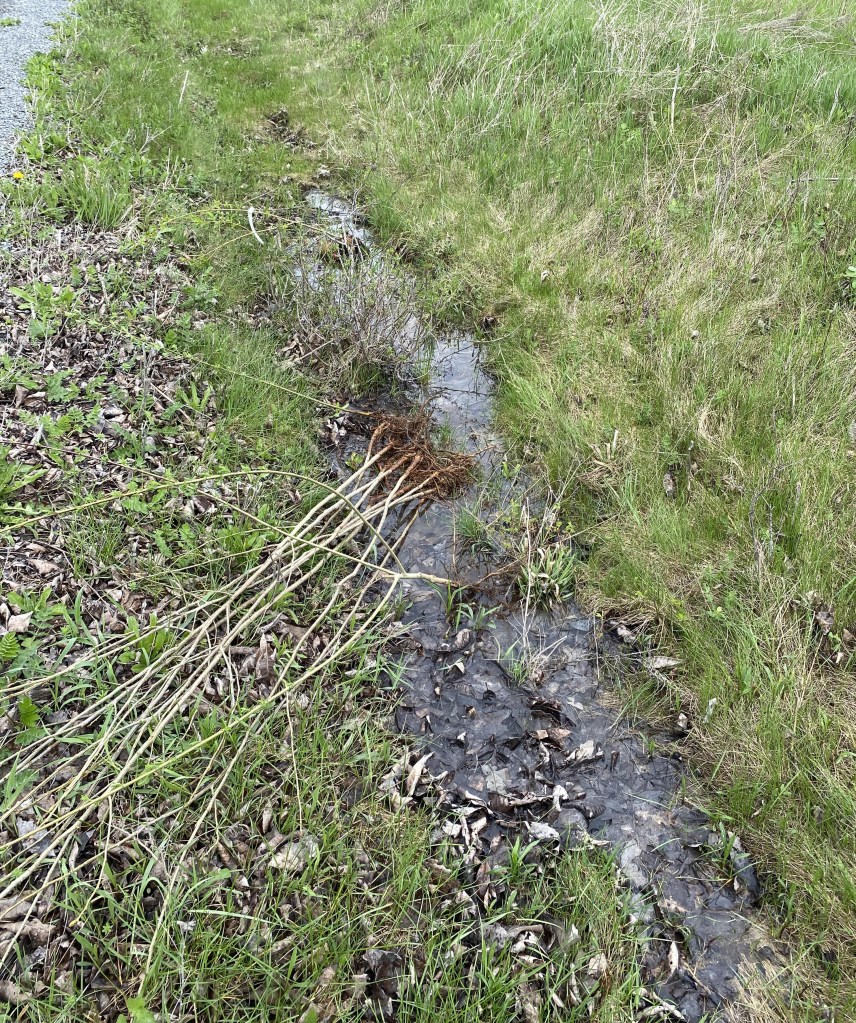
Photo 6. Dormant willow whips staged in a flooded ditch ahead of planting. These moisture-tolerant stems will help stabilize berms and restore structure along a fragmented hedgerow.
Looking Ahead
Ongoing work at the Root Radical CSA site continues to build on the phased restoration strategy laid out during the initial assessment. Invasive species removal and supplemental planting are proceeding one patch at a time, with each intervention matched to the site conditions and followed by the care needed for long-term recovery. Photo 7 shows a recent example of this work where buckthorn and invasive vines were removed from a young native stand, opening space for healthy growth and reducing pressure on saplings. Active rehabilitation across the 19-acre project area will continue into 2025, after which monitoring and light maintenance will guide the site’s next chapter.
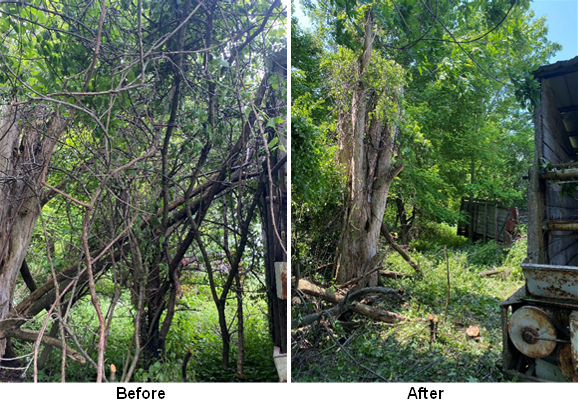
Photo 7. Before and after images showing the removal of buckthorn and vine overgrowth along a young native forest edge bordering a cultivated field.
This project reflects a broader philosophy that guides our work at Greenscale: large, degraded landscapes don’t require wholesale transformation—they require sequencing, patience, and a working relationship with the land. What feels daunting from a distance often becomes manageable through a zone-based approach that balances ecological priorities with practical constraints.
At Greenscale, our goal is to help landowners and communities take meaningful steps toward landscape restoration—strategically, affordably, and with long-term care in mind. If you’re working with a landscape that’s ecologically degraded, difficult to manage, or needs improvements in climate resiliency, we’d be happy to help you take the first step
 Greenscale